
.png)
Seat Belts and Safety Certificates: What You Need to Know Before Your Inspection. Common Seat Belt Faults.
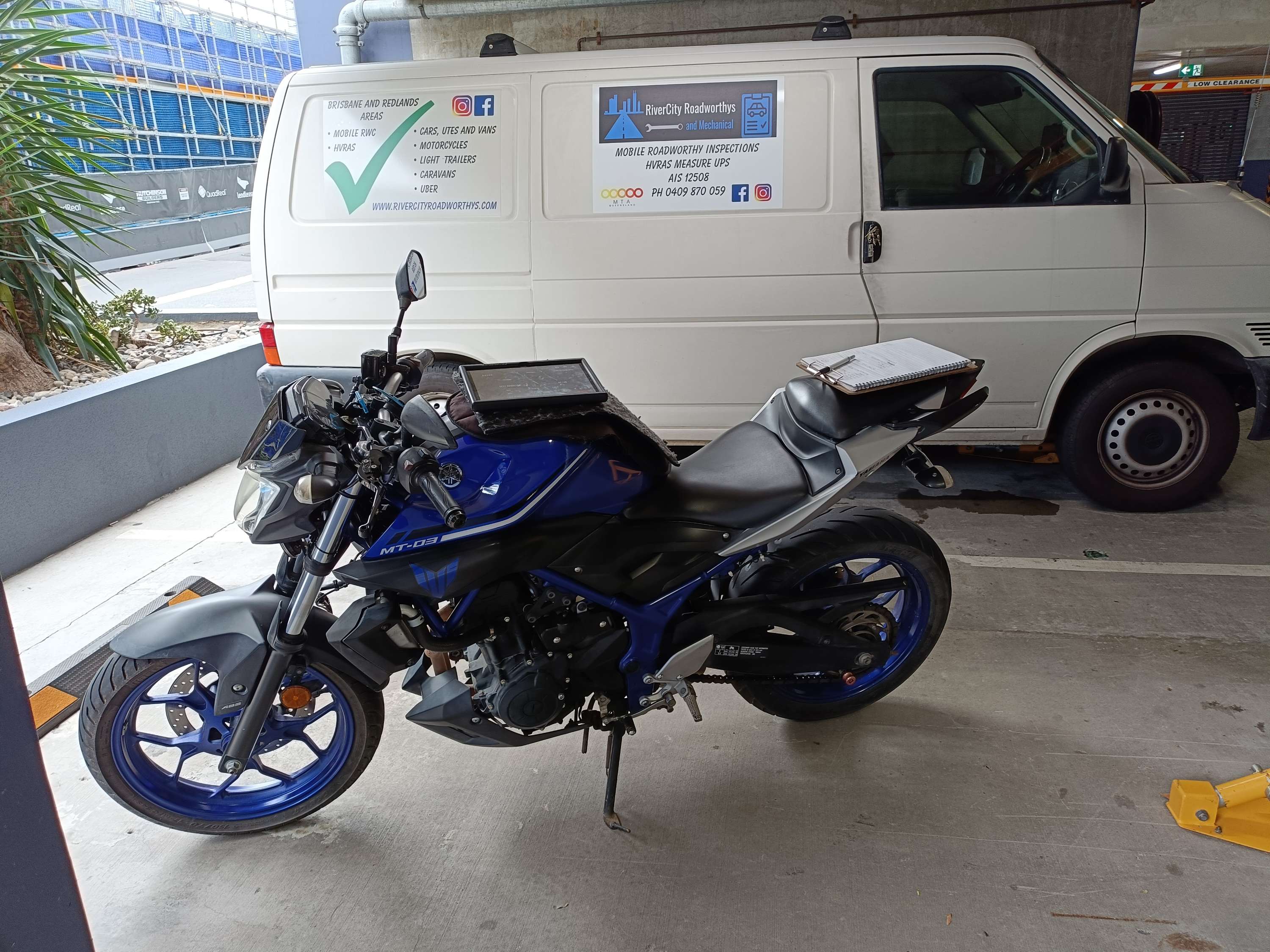
Most people assume their seat belts are fine. They click in, they retract, they feel solid enough. But in over 25 years of inspecting vehicles, seat belt issues are one of the more common reasons a car doesn't get through its safety certificate on the first attempt — and most of the time, the owner had absolutely no idea there was a problem.
Here's a plain-English breakdown of what I look for, and what you should check before booking your inspection.
Child Seat Belt Routing Damage - common fault
This one surprises a lot of parents. When you fit a child restraint or booster seat in the back, the lap/sash belt gets routed through guides, tucked under clips, and loaded in ways it was never really designed for day-to-day. Over time — and we're talking months or years of this — the webbing develops kinks, gets crushed repeatedly in the same spot, or starts to fray where it bends under load.
The tricky part is that this damage is often hidden. With the belt retracted and the child seat in place, everything looks fine. It's only when the belt is fully extended and examined closely that you can see the damage — flattened webbing, discolouration, fraying fibres, or a stiff section that won't flex properly.
If you have child restraints fitted in the back, do yourself a favour before your inspection: remove the seat, fully extend each belt, and run your hand along the entire length of the webbing. Look for any kinking, crushing, or areas where the weave looks different from the rest. If something looks off, have it assessed — a replacement belt is far cheaper than a failed inspection and a second visit.

Rear Folding Seat Latches Catching the Belt
This is probably the most commonly overlooked seat belt issue I come across, particularly in wagons, SUVs, and vans with fold-flat rear seating.
When the rear seat back folds down — say, to carry a load — the seat belt often gets caught in or near the latch mechanism. Every time the seat is folded and unfolded, the belt webbing can be pinched, abraded, or cut by the latch. It happens gradually, and because most people fold their rear seats without giving the belts a second thought, the damage builds up without anyone noticing.
By the time I get to inspect the vehicle, the webbing can have cuts, worn patches, or a section that's been partially severed. I've seen belts that looked completely normal from a distance but were damaged right at the latch point.
Before your inspection, fold your rear seats down and have a look at where the belt sits when the latch engages. Extend the belt fully and check for any cuts, scuffs, or worn areas — particularly within the first 300mm of the retractor where the belt passes closest to the latch.

Cuts, Fraying, and General Webbing

Damage Seat belt webbing is tough, but it's not indestructible. Sharp edges inside the vehicle — tools left in the boot, a box cutter, fishing gear, anything with an edge — can nick or cut the webbing if the belt happens to rest against it. Slamming a door or a boot lid on a belt is another common culprit. Even prolonged UV exposure in vehicles without window tint can degrade webbing over time, making it stiff and brittle.
What to look for: any visible cut or nick in the webbing, no matter how small. A partial cut is still a failure — the strength of the belt is compromised even if it looks like it holds. Fraying at the edges, particularly near the tongue or retractor, is also a red flag. If the belt has been chewed by a pet, that counts too. It happens more often than you'd think.
Run the belt through your fingers along its full length and look at it in good light. The webbing should be uniform, smooth, and free of any damage.
Important: if a seat belt needs replacing, it must be a brand new belt — not a secondhand one. Queensland roadworthy requirements do not accept a used seat belt as a valid replacement, regardless of its apparent condition or where it came from. If you've been quoted a repair using a belt sourced from a wrecker or used parts supplier, that vehicle will not pass. New belt only.
Damaged Buckles and Stalks

A seat belt that clicks in but doesn't hold is worse than useless — it gives a false sense of security. I test every buckle by pushing down on the tongue while the belt is latched to check that it doesn't release under load. A buckle that releases with light pressure, or one where the button depresses too easily, is a fail.
I also check buckle stalks — the short webbing or metal arm that holds the buckle in position. Stalks that are bent, twisted, or showing signs of being pulled hard (often from a past accident) can affect how the buckle aligns with the tongue, which in turn affects latch security. I
f you've ever had to jiggle a buckle to get it to catch properly, or if it feels loose after clicking in, get it looked at before your inspection. And if the vehicle has been in any sort of collision — even a minor one — the belts on that side should be treated as suspect regardless of how they look.
Seating Capacity and Seat Belt Compliance
This section catches a lot of people off guard, so I want to explain it carefully.
Every seating position in a vehicle must have a compliant seat belt. That's the rule. It doesn't matter whether you ever use that seat — if it's listed as a seating position, it needs a working, compliant belt.
Where this becomes an issue is with 4WDs, vans, and people movers that have had third-row seating removed. It's a very common modification — people remove the third row to free up cargo space. The problem is that simply removing the seats doesn't automatically remove those positions from the vehicle's registered seating capacity. If the vehicle's registration still lists, say, seven seats, then all seven seating positions need compliant belts — including the anchor points for the removed row.
To do this properly, you need to either:
Have the remaining anchor points and belts removed and the seating positions formally de-registered with the relevant authority, or
Reinstate the seats and belts so all listed positions are compliant, or Have the vehicle's seating capacity formally downgraded via the Modification Plate process, carried out by an Approved Person.
This is a legitimate compliance pathway — an Approved Person assesses the modification to your vehicle and issues a Modification Plate that legally recognises the reduced seating capacity. It's worth looking into if the change to your vehicle is permanent and you want the paperwork to actually reflect that. If none of these steps have been taken and the vehicle arrives for inspection with removed seats but listed seating positions, it won't pass. This applies whether the seats were removed last week or years ago.

If you're not sure what your vehicle is registered as, check your registration certificate or contact the Department of Transport and Main Roads. It's worth knowing before your inspection, not after.
Book Your Mobile Safety Certificate Inspection
Seat belts are one of the more straightforward things to check yourself before booking — and doing so could save you the cost and inconvenience of a second visit.
If you've gone through the checks above and something doesn't look right, it's better to know now. Its better to know the common faults with seat belts and to identify them so you can have any necessary work to get them legal and most importantly - safe.
We come to you — your home, your workplace, wherever works — across Brisbane and Redlands, seven days a week. Inspections are thorough, certificates are issued electronically on the spot, and I'll explain anything I find in plain terms so you understand exactly what's happening with your vehicle.
Book online at www.rivercityroadworthys.com (https://www.rivercityroadworthys.com) and save $20 instantly, or give us a call on 0409 870 059 if you'd like to have a chat first.


Comments