
.png)
Queensland LAMS Motorcycles: What Riders Get Wrong at Roadworthy Time
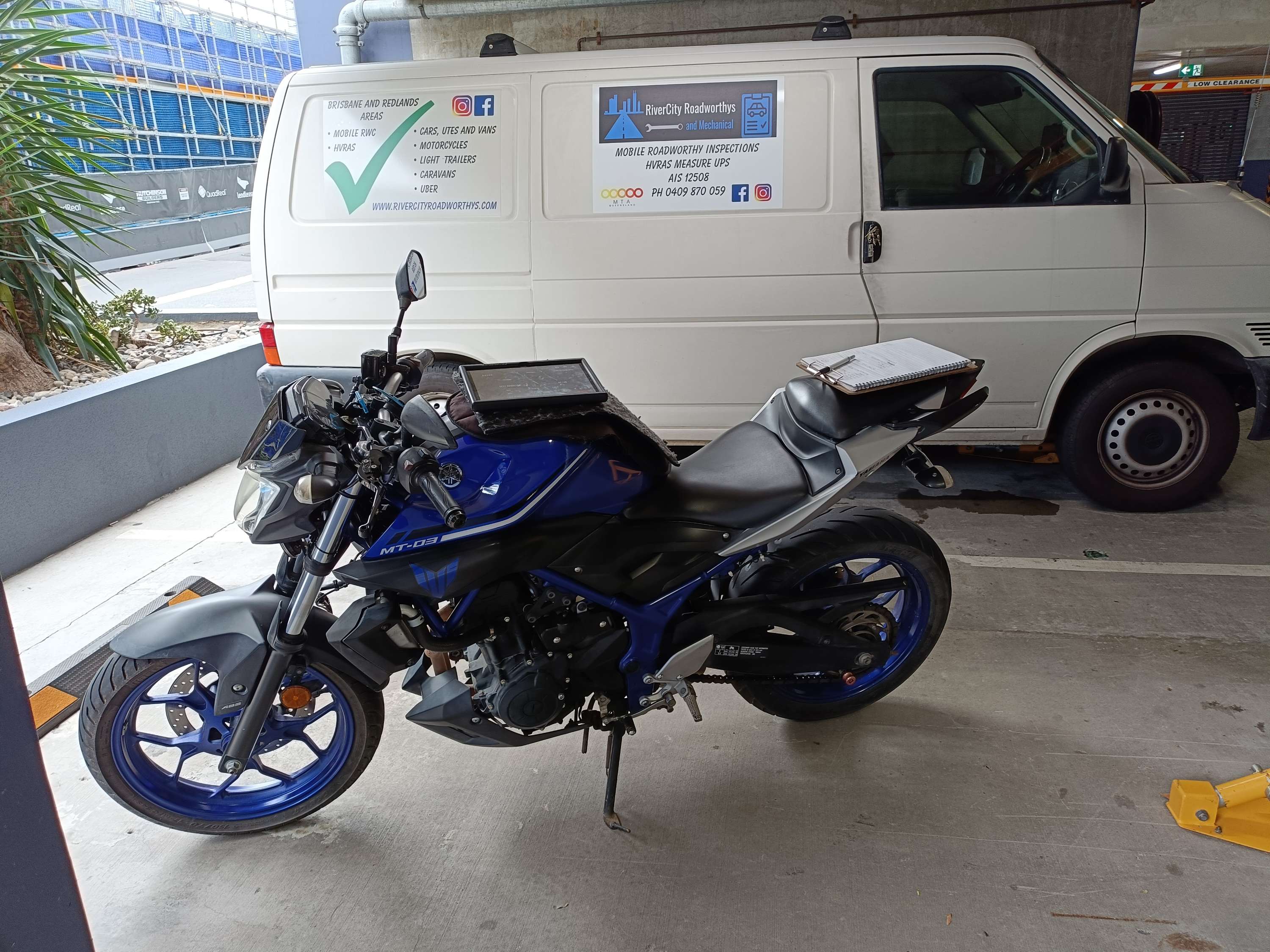
The Learner Approved Motorcycle Scheme (LAMS) catches a lot of riders out when it’s time for a Queensland safety certificate, especially when it comes to “little” mods that actually make the bike non‑compliant.

What is the LAMS scheme in Queensland?
Queensland’s Learner Approved Motorcycle Scheme limits learners and RE class riders to motorcycles and scooters that meet strict engine capacity and power‑to‑weight criteria, and appear on the approved LAMS list. A learner approved motorcycle must have an electric motor or an internal combustion engine up to 660 mL and a power‑to‑weight ratio not exceeding 150 kW per tonne. Certain high‑performance 250 mL models are specifically excluded even though they are under 250 mL, because they exceed the allowed power‑to‑weight.qld.
Who must ride a LAMS bike?
If you hold an RE licence (learner, provisional or open), you must ride a learner approved motorcycle – that rule does not disappear just because you move from learner to RE provisional or RE open. This means all your regular licence conditions apply (zero BAC in some cases, P‑plates, passenger rules), but on top of that, the actual bike must remain a compliant LAMS model. Riders progressing to an R (unrestricted) licence can then ride any motorcycle, but until that upgrade happens, you are tied to LAMS‑approved machines.
Open class riders on LAMS bikes – a hidden trap
One point many people miss: the LAMS rules are about the bike as well as the rider. If you hold an open R licence and choose to ride a motorcycle that is listed as a learner approved model, that motorcycle still has to remain within the LAMS criteria if it is being used as a LAMS bike for an RE rider. Modifications that would take a LAMS bike outside its approved power‑to‑weight or emissions configuration can affect its status on the scheme, regardless of who is riding it.
For example, if an open class rider heavily modifies the engine, intake and exhaust on a LAMS‑approved model so that it no longer matches the configuration used for approval, it may no longer meet the LAMS threshold even if it still looks like the same model on paper. That is a potential problem if the bike is later sold to – or borrowed by – an RE rider who must legally ride only a compliant LAMS motorcycle.
Roadworthy vs LAMS: Why “small” mods can fail your safety certificate
The Queensland Light Vehicle Inspection Manual and motorcycle standards require that any inspected motorcycle comply with the Australian Design Rules (ADRs) that applied when it was built, as well as current Queensland vehicle standards. During a safety inspection the examiner is not just looking at tyres and brakes; they are also checking lighting, reflectors, exhaust, emissions components and any seat or structural changes.
Here are some of the most common issues that cause LAMS bikes to fail a roadworthy inspection.
1. Non‑standard exhaust systems
Aftermarket exhausts are one of the biggest failure points on learner approved motorcycles.
Exhausts must comply with noise limits and relevant ADRs for the motorcycle, and must be free of leaks and properly supported.
Replacement exhaust components must either match the original specification or be appropriately certified and marked in line with ADR requirements.
A straight‑through or “race” exhaust with no proper silencing, or with cut‑out baffles, will generally not meet the standards and will be defect‑prone on the road and at inspection.
On a LAMS bike, a non‑standard exhaust can also raise questions about whether the machine still matches the configuration that was assessed for LAMS approval, especially if combined with intake, ECU or engine modifications

2. Missing catalytic converter or emissions gear
Modern motorcycles are built to meet emission ADRs and usually include a catalytic converter and related emission‑control components in the exhaust system.
Removing the catalytic converter, oxygen sensor or other emissions hardware can take the bike outside the original ADR compliance for emissions.
The Queensland modification guidance specifies that fittings for emission control equipment must be incorporated so the vehicle continues to comply with ADR emission standards.
If a safety inspection reveals that the cat has been removed or a “de‑cat” pipe has been fitted in place of the factory unit, that is grounds for failure, even if the bike still runs and sounds “fine”.
3. Non‑compliant indicators – no “E” mark and poor positioning
Lighting and indicator requirements cause a lot of unnecessary fails, particularly on bikes that have been cosmetically customised.
All indicators must comply with the relevant ADRs and carry the correct markings (such as the manufacturer’s name or trademark and the appropriate compliance marks).
Tiny aftermarket or “flush‑mount” indicators without proper ADR/E‑mark style compliance markings may not meet the standard, even if they light up.
Positioning and visibility matter – indicators must be clearly visible from prescribed angles and distances, which many very small aftermarket units are not.
In short, “they blink” is not enough – they have to be the right type, in the right place, and properly marked.

4. Missing reflectors
Reflectors are simple and cheap, but their absence is a very common reason for a motorcycle to fail a safety certificate.
All motorcycles must have at least one rear‑facing red reflector that is visible from either side of the rear of the motorcycle.
Motorcycles manufactured after 1 October 1990 must comply with ADR 19, which requires one or two side reflectors on each side and one or two front reflectors.
Additional reflectors must be at equal height, and only red, white or yellow reflectors are allowed depending on their position.
Tail tidies, aftermarket mudguards and custom indicators often remove or relocate the original reflectors, leaving the bike non‑compliant until new, correctly placed reflectors are fitted.
5. Improper single‑seat conversions
Seat conversions are another area where cosmetic changes can accidentally breach the rules.
Queensland guidance treats conversion of a motorcycle from a two‑seater to a single‑seater (or vice‑versa) as a basic modification, but there are conditions. To be accepted, a single‑seat conversion must be carried out in a way that genuinely prevents the carriage of a pillion passenger and remains consistent with ADRs and registration details.
Common problems include:
Leaving the pillion footpegs fitted when claiming a single‑seat conversion.
Leaving the pillion seat strap in place, which can be interpreted as a passenger grab point.
Simply fitting a cosmetic cowl over the pillion seat without removing seat hardware or properly securing the cowl.
If the bike is still practically capable of carrying a pillion, or the conversion is not in line with the standards, it may not be accepted at inspection and can affect registration seating capacity and insurance.
Practical tips for LAMS riders before a roadworthy
A few simple checks beforehand can save a failed inspection and a lot of frustration.
Confirm your bike is on the current Queensland LAMS approved list by checking the official government website under LAMS scheme.
If you have an RE licence (learner, provisional or open), make sure the bike you bring to your test or inspection is both LAMS‑approved and mechanically and legally standard, particularly for exhaust, intake and emissions.
Check that exhaust, indicators and other components carry appropriate markings and are securely mounted, and that reflectors are present front, sides and rear as required.
If your motorcycle has been “single‑seated”, ensure the work genuinely removes pillion seating and grab points and matches how the bike is registered.
By understanding how Queensland’s LAMS rules interact with the roadworthy standards, riders can keep their bikes legal, avoid surprise inspection failures, and stay on the right side of both licensing and vehicle regulations.
CONCLUSION
Queensland’s LAMS rules are not just about what licence you hold, but what condition your motorcycle is in when it rolls up for a safety inspection. By keeping your bike close to factory specification – especially around exhausts, catalytic converters, lighting, reflectors and seat configuration – you dramatically reduce the risk of a failed roadworthy and an unpleasant surprise when you go to sell or re‑register. Taking the time to check that your LAMS bike is still genuinely compliant protects you, your licence progression and any future learner or RE rider who might own that motorcycle after you.


Comments